Understanding the learning approach, academic pathway and skills that can help children prepare for a changing world
Choosing a school curriculum is about more than picking an examination board. Parents want to know how their child will learn how teachers will notice their strengths and whether the school will help them grow in confidence to take on challenges. For families thinking about Cambridge education these things are just as important as the qualifications.
The Cambridge pathway is one of options available in India, alongside CBSE, ICSE and state boards. Each has its structure and advantages. The best choice depends on a child’s learning style the family’s long-term goals, the subjects the student may want to study and the kind of learning environment where the child feels most supported and engaged.
Cambridge International education focuses on building subject knowledge and developing skills like analysis, application, problem-solving and independent thinking. Students are encouraged to explain their thinking use evidence and apply what they know to unfamiliar problems— than just memorizing facts.
The learning experience changes as students move through stages. In the years subject choices and assessment methods become more significant especially for students preparing for IGCSE and Cambridge International AS & A Levels.
At GIG International School (GIGIS) Bengaluru, the school’s stated approach combines academic foundations with broader skills intended to help students become curious, capable and adaptable learners. Its proprietary 4Q learning framework is designed to support enquiry, innovation, entrepreneurship, social skills and environmental awareness.
Interdisciplinary Learning (IDL) is another part of this approach. Rather than treating each subject as a separate pile of facts Interdisciplinary Learning (IDL) invites students to find links between different fields of study. For instance a project on water conservation might bring together science, math, for data analysis English for sharing results and social studies to think about how water availability impacts communities. The goal is to help students see how knowledge can be applied to questions that lie beyond a simple textbook.
These are the kinds of connections parents can ask about when visiting a school: How do students explain their ideas? Do they have opportunities to investigate questions? How do teachers help them apply what they have learned in a new context? The answers can reveal more about a child’s likely classroom experience than a curriculum label alone.
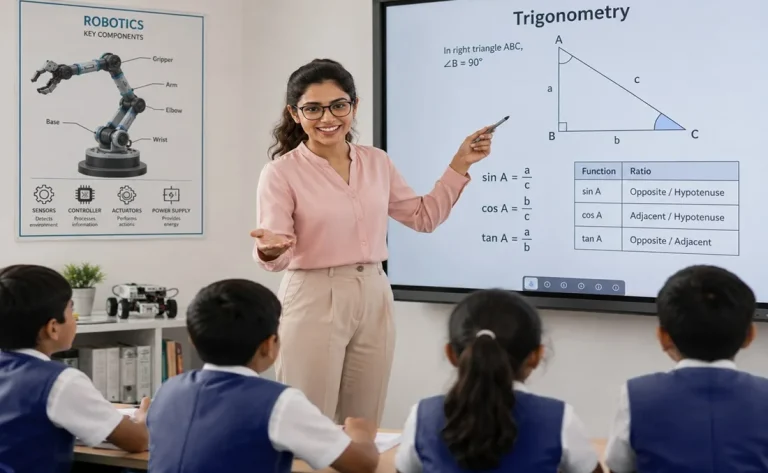
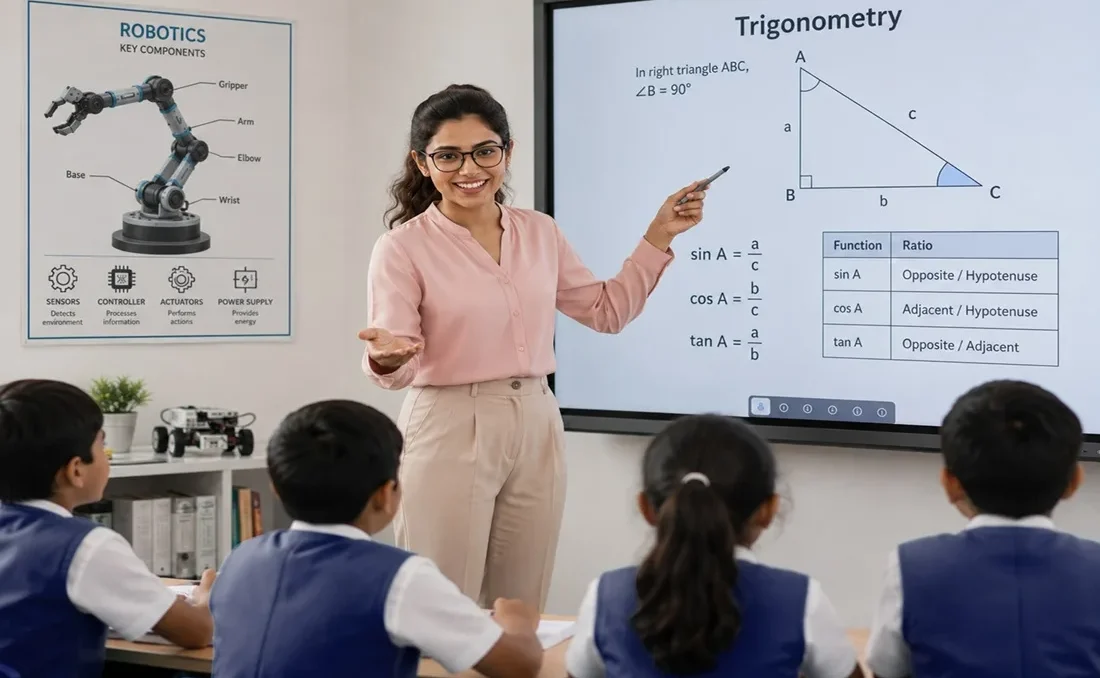
Digital tools are increasingly part of education and everyday life. At GIGIS Bengaluru, the school describes opportunities to explore areas such as AI, Robotics, coding, media and ICT. The educational value of these experiences lies not only in using technology, but in developing the habits that make its use thoughtful: asking clear questions, testing ideas, identifying errors, checking information and considering the consequences of a decision.
A well-designed coding task, for instance, asks a student to break a problem into steps, test a set of instructions and troubleshoot when the result is not as expected. Those habits can also support learning in Mathematics, Science and other subjects. Technology is most useful when it gives students more ways to investigate, create and explain—not when it replaces their own thinking.
The school’s Innovation Lab and STEAM-enabled learning spaces are described as supporting hands-on experimentation, design thinking and the connection between Science, Technology, Engineering, Arts and Mathematics. Parents may wish to ask how often students use these spaces, what age groups they serve and what kinds of projects they undertake.
Assessment should do more than produce a score. It can help teachers understand whether a student has grasped a concept, can apply a method independently, or needs more practice with a particular skill. A student who answers a familiar Mathematics question correctly may still need help applying the same idea to a word problem. Identifying that difference allows support to be more focused.
GIGIS Bengaluru describes regular assessments and progress-monitoring tools, including its 5S Performance Monitoring Tool and Child Tracker system. These are intended to give the school and families insight into a student’s progress and milestones. The practical value depends on how information is used: teachers should be able to identify next steps, students should understand what they can improve, and parents should receive useful communication about progress.
Where a learning gap is identified, targeted explanations, guided practice and opportunities to apply a concept can help a student strengthen understanding. Students who are ready for greater challenge also need opportunities to extend their thinking. A responsive learning environment should make room for both support and stretch.
Children develop in different ways and at different rates. Alongside English, Mathematics and Science, GIGIS Bengaluru describes learning opportunities in ICT, Life Skills, Performing and Visual Arts, Physical and Health Education, projects, sports and co-curricular activities. Such experiences can give students different ways to practise communication, collaboration, creativity and self-management.
The school also refers to its 7-Strand Model and the Tilli social-emotional learning platform as elements of its wider development approach. These initiatives should be understood in terms of what students experience: how they learn to recognise emotions, work through disagreements, take responsibility and contribute to a group. These skills complement academic learning; they do not replace it.
A curriculum becomes meaningful through the people who teach it. GIGIS Bengaluru states that its teachers receive Singapore-linked training and mentoring through the GIG Professional Development Centre, with an International Academic Advisory Board drawing on expertise from Canada, India, Singapore and the Philippines. For parents, useful follow-up questions include how professional development informs classroom practice, how teachers share feedback, and how the school responds when a student needs additional help.
The school also describes smaller class sizes, sports and cultural activities, and a five-code safety protocol. Facilities and policies matter, but their value is best judged through everyday practice: whether students can participate safely, whether learning spaces are used purposefully, and whether children feel respected and supported.
There is no single curriculum that is best for every child. Cambridge may suit families who value its approach to conceptual understanding, subject flexibility in later stages and internationally used qualifications. Other boards may be a better fit for different students or family plans. Parents should compare curriculum, teaching, assessment, wellbeing, school culture, fees, location and the pathway available after each stage.
For families considering GIG International School Bengaluru, the key question is how the school’s curriculum, 4Q framework, interdisciplinary learning, digital opportunities and student-support practices come together in the actual classroom. A campus visit and a conversation with the admissions team can help parents understand whether that environment fits their child.
Not universally. The best fit depends on a child’s learning needs, the family’s educational plans and the quality of teaching and support at the individual school. Compare the curriculum and classroom experience rather than relying on broad claims of superiority.
Cambridge qualifications are used by universities in many countries, but entry requirements vary by institution, course and country. Students should check the requirements of the universities and programmes they may wish to pursue.
Ask how lessons are taught, how progress is assessed, how teachers respond to learning gaps, what subject choices are available at each stage, and how the school supports student wellbeing. Ask to see examples of learning and assessment where possible.
The school describes an approach that includes the 4Q framework, Interdisciplinary Learning, digital learning opportunities, STEAM, arts, sports and co-curricular activities. Families should ask the school how these are scheduled and experienced by students at their child’s age and stage.
A strong school experience combines a clear academic pathway with teaching that helps children understand, question, apply and keep learning. If you are considering GIG International School Bengaluru, speak with the admissions team and explore how its curriculum and wider learning environment may support your child’s next stage.